
Living Between Chronic Symptoms, Conflicting Information, and the Search for Better Answers
Part 2 of the series: A Changing Landscape in Health and Healing
In the previous piece, I explored the broader changes taking place across medicine, chronic illness, and cannabinoid-based therapeutics—and why patients, clinicians, and frontline cannabis workers are all searching for better frameworks.
Living with More Questions Than Answers
For many patients, however, this search is not theoretical.
It is deeply personal.
Most people do not begin exploring cannabinoid-based therapeutics because they are casually curious about cannabis itself. They arrive there after years of trying to manage symptoms that continue to affect their quality of life despite medications, procedures, supplements, diets, or lifestyle changes.
Chronic pain. Anxiety. Insomnia. PTSD. Digestive disorders. Autoimmune conditions. Menopause-related symptoms. Neurodegenerative diseases. Migraines. Emotional exhaustion. Chronic inflammation.
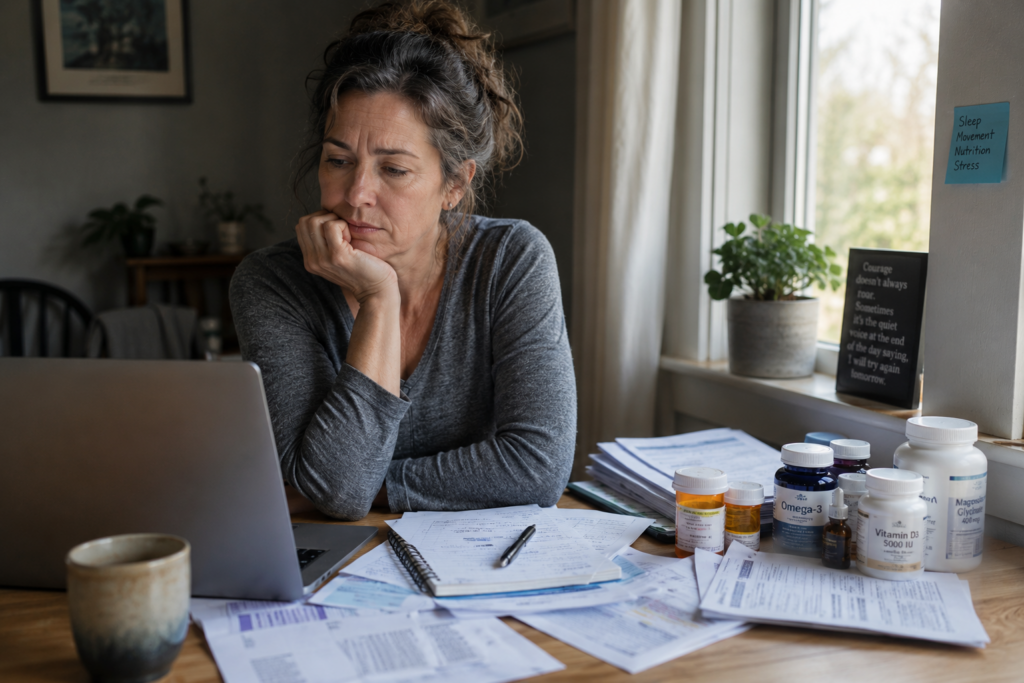
Many patients have spent years moving from appointment to appointment, treatment to treatment, specialist to specialist, trying to understand why they still do not feel well.
At the same time, access to information has exploded.
Why Information Alone Is Not Enough
Patients can now find thousands of videos, podcasts, social media posts, dispensary recommendations, Reddit discussions, product reviews, and online testimonials within minutes. Some of this information is helpful. Much of it is incomplete, contradictory, oversimplified, or disconnected from the actual science.
This leaves many people caught between two extremes.
On one side is a purely pharmaceutical model that may help manage symptoms, yet often leaves people feeling unseen in the complexity of their lived experience. On the other side is a wellness landscape that sometimes promises too much certainty while offering too little physiological understanding.
Somewhere in the middle are patients simply trying to make informed and discerning decisions.
Why Responses Differ
One of the most confusing aspects for many people is variability.
Why does the same product help one person sleep deeply, while another feels anxious or overstimulated? Why does one patient experience pain relief while another notices very little effect at all? Why do some people respond well to THC, while others do better with CBD-rich preparations, terpenes, or non-intoxicating endocannabinoid modulators?
Part of the answer lies in the fact that human beings are not identical systems.
Each person brings a unique physiology, history, stress load, inflammatory state, emotional landscape, genetics, medication profile, sleep pattern, diet, trauma history, microbiome, and nervous system baseline into the experience. This is one reason the same cannabinoid formulation can affect different individuals in dramatically different ways.
This is also where the endocannabinoid system (ECS) becomes increasingly important.
The ECS is a widespread regulatory network involved in stress adaptation, pain modulation, immune balance, sleep, emotional regulation, memory, appetite, social bonding, and homeostasis itself. Rather than functioning as a single “on-off switch,” it helps the body continuously adjust and respond to both internal and external changes.
From this perspective, cannabinoid-based therapeutics are not simply about “taking cannabis.” They are part of a larger conversation about regulation.
For some people, supporting the ECS may help reduce pain intensity, calm inflammatory responses, improve sleep, soften emotional reactivity, or create conditions in which healing becomes more possible. For others, certain cannabinoids may worsen anxiety, affect motivation, impair cognition, interact with medications, or create unwanted side effects.
This is why discernment matters.
One of the problems in modern cannabis culture is that many conversations still revolve around products instead of people.
Patients are often encouraged to think in terms of:
- strains
- potency
- trends
- THC percentages
- marketing language
rather than:
- physiology
- symptom patterns
- stress regulation
- sensitivities
- dosing variability
- treatment goals
- safety considerations
- individual response patterns
The conversation becomes even more complicated when chronic illness overlaps with emotional exhaustion, trauma, isolation, poor sleep, nervous system dysregulation, or longstanding stress.
The boundaries between mind and body become far less clear the closer we look.
This does not mean symptoms are “all in your head.” It means human physiology is deeply interconnected. Stress physiology affects inflammation. Sleep affects emotional regulation. Trauma affects perception and nervous system responses. Chronic illness affects mood, coping, resilience, relationships, and behavior.
Patients intuitively sense this interconnectedness even when they lack the language to describe it.
Looking for Orientation, Not Just Relief
What many people are ultimately searching for is not simply symptom suppression. They are searching for orientation.
They want to understand:
- What is happening in my body?
- Why am I reacting this way?
- Why did this help someone else but not me?
- What does the evidence actually suggest?
- What are the risks?
- What role does stress play?
- How do I make safer and more informed decisions?
These are healthy questions.
And increasingly, they require better educational frameworks than either simplistic marketing or polarized online debates can provide.
This is part of why we have been developing more patient-facing educational tools at CannaKeys. Not to replace clinicians or reduce medicine to algorithms, but to help people better understand the relationship between symptoms, physiology, the ECS, safety considerations, and emerging evidence.
Moving Beyond Symptoms
The goal is not to convince everyone to use cannabinoid-based therapeutics. The goal is clarity. Informed patients tend to make better decisions than overwhelmed ones.
In the next piece, I’ll explore the growing curiosity—and understandable hesitation—that many clinicians are experiencing as they try to navigate this rapidly evolving field responsibly.
Next in the Series
Part 1 (in case you missed it): A Changing Landscape in Health and Healing
Part 3: Why So Many Clinicians Are Curious—Yet Still Hesitant
Part 4: For Budtenders and Purveyors
Part 5: The ECS as a Shared Language for Patients, Clinicians, and Purveyors
Part 6: Why We Built a Patient-Facing ECS Platform
To read on Substack, click here: