Cannabinol (CBN) Research Dashboard
What am I missing as a non-subscriber?
To see a full dashboard with study details and filtering, go to our DEMO page.
As a subscriber, you will be able to access dashboard insights including chemotype overviews and dosing summaries for medical conditions and organ system and receptor breakdowns for cannabinoid and terpene searches. Study lists present important guidance including dosing and chemotype information with the ability to drill down to the published material. And all outputs are fully filterable, to help find just the information you need. Stay up-to-date with the science of cannabis and the endocannabinoid system with CannaKeys.
CannaKeys has 156 studies associated with Cannabinol (CBN).
Here is a small sampling of Cannabinol (CBN) studies by title:
- Preclinical Evidence for a Drug-Drug Interaction Between Cannabinol and Melatonin
- Effectiveness of a Cannabinoids Supplement on Sleep and Mood in Adults With Subthreshold Insomnia: A Randomized Double-Blind Placebo-Controlled Crossover Pilot Trial
- Research and Clinical Practice Involving the Use of Cannabis Products, with Emphasis on Cannabidiol: A Narrative Review
- Effects of prenatal cannabinoid use on the monoamine system in the fetoplacental unit: A systematic review of animal and human studies
- Infant Death due to Cannabis Ingestion
Ready to become a subscriber? Go to our PRICING page. Want to learn more about Endocannabinoid Medicine? Buy a book.
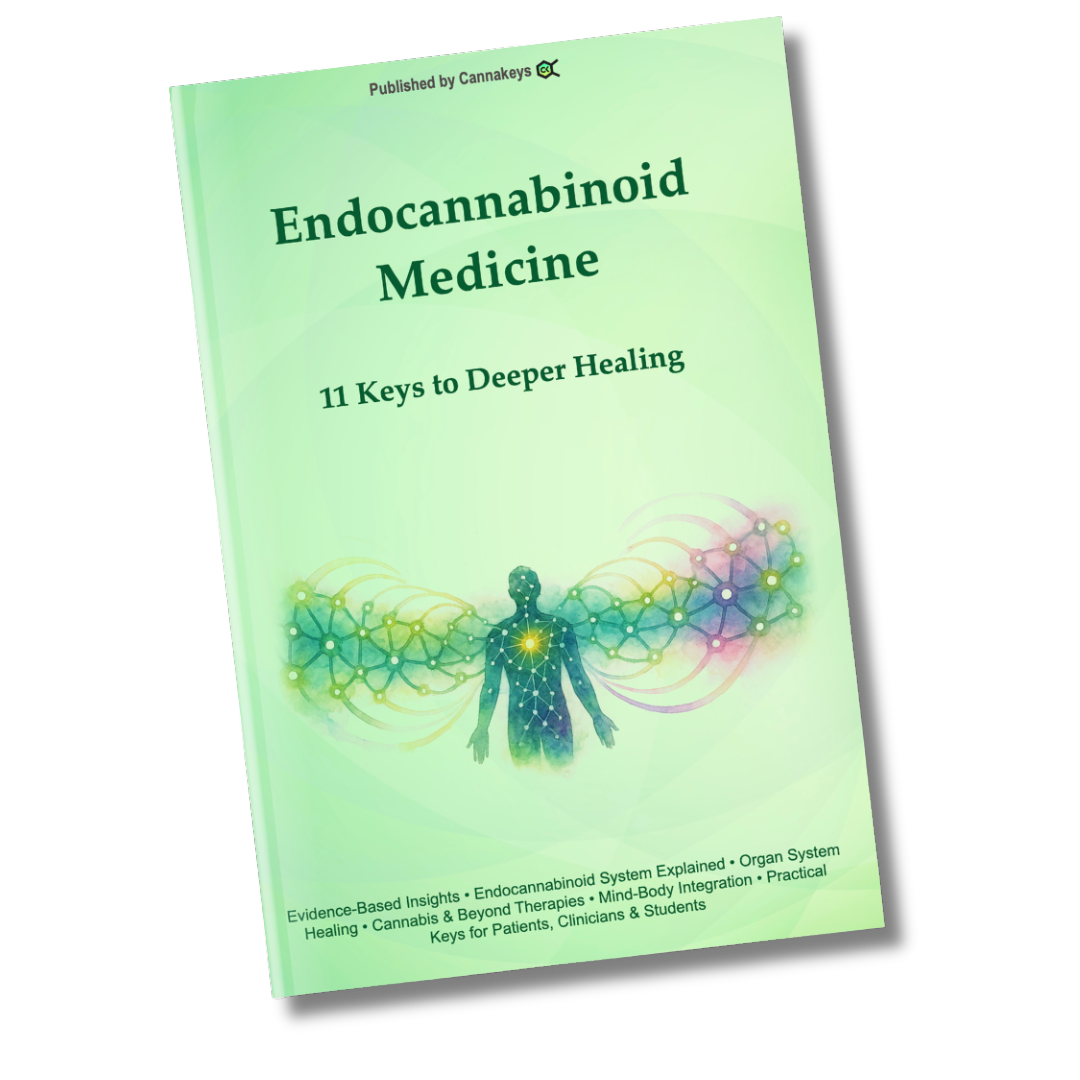
Endocannabinoid Medicine: 11 Keys to Deeper Healing
Your body already carries the keys to healing. At the center of it all is the endocannabinoid system (ECS)—a hidden bridge between body, mind, and spirit that works quietly in the background to restore balance, ease pain, calm stress, and support resilience.
Buy Book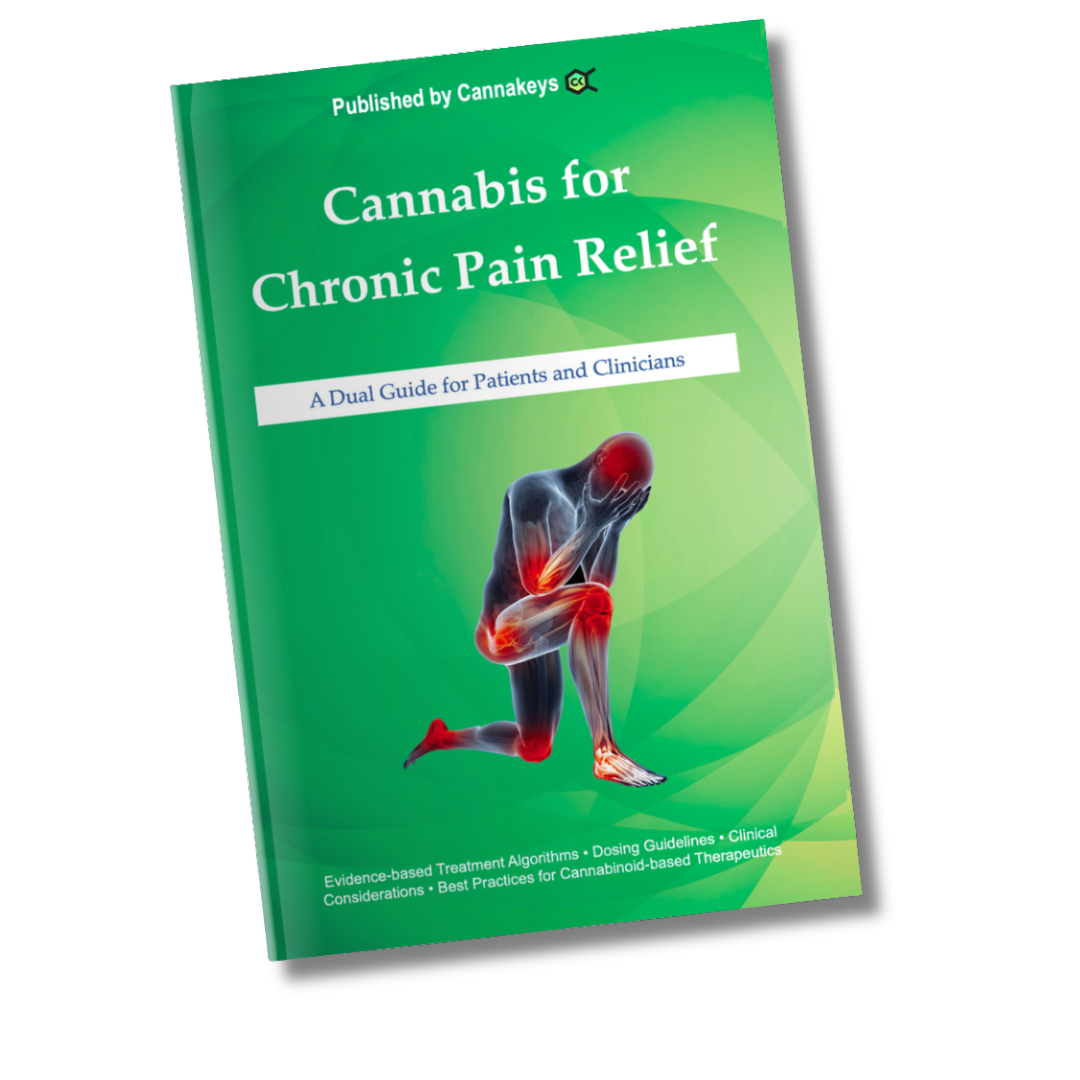
Cannabis for Chronic Pain Relief: A Dual Guide for Patients and Clinicians
Chronic pain impacts one in four people, yet safe and effective long-term treatments remain limited. This practical guide offers an evidence-based algorithmic framework for using cannabis and cannabinoids with clarity and confidence.
Buy BookPage Quick Links
Select New Cannabinoid
Overview - Cannabinol (CBN)
Description of Cannabinol (CBN)
Cannabinol (CBN) was discovered in 1896 (by Wood, Spivey, and Easterfield), and its chemical structure was reported in 1940 by Roger Adams.
Non-enzymatic oxidative degradation of THCA associated with exposure to oxygen or UV radiation converts THCA into cannabinolic acid (CBNA), CBN's acidic form and precursor. As cannabis ages, the carboxyl group is removed, leaving CBN in its place. Both CBNA and CBN are found naturally only in very low concentrations in the plant. According to a toxicometabolomic study, CBN concentration in cannabis leaves ranges between 0.1 and 1.6% (w/w of dry weight) (I. Chousidis et al., 2020)
By 2016 there were 13 members in the CBN group.
CBN Psychoactivity: A quick look at the receptor binding window shows that CBN binds to the same CB1 receptor sites (abundantly present in the brain) as THC but with a weaker affinity meaning that it can still induce changes in cognition and mood but only at about one-tenth of the strength of THC.
Other Names:
CannabinolCannabinolum, Cannabinolo, and other supplier-based synonyms.
IUPAC Name: 6,6,9-trimethyl-3-pentylbenzo[c]chromen-1-ol
Molecular Formula: C21H26O2
Source–PubChem
Cannabinol (CBN) Properties and Effects
Only Members can view Properties and Effects information. See DEMO page.
Cannabinol (CBN) Receptor Binding
Only Members can view Receptor Binding information. See DEMO page.
Disclaimer
Information on this site is provided for informational purposes only and is not meant to substitute for the advice provided by your own licensed physician or other medical professional. You
should not use the information contained herein for diagnosing or treating a health problem or disease. If using a product, you should read carefully all product packaging. If you have or suspect that you have a
medical problem, promptly contact your health care provider.
Information on this site is based on scientific studies (human, animal, or in vitro), clinical experience, or traditional usage as cited in each article. The results reported may not necessarily occur in all individuals. For many of the conditions discussed, treatment with prescription or over-the-counter medication is also available. Consult your physician, nutritionally oriented health care practitioner, and/or pharmacist for any health problem and before using any supplements or before making any changes in prescribed medications.